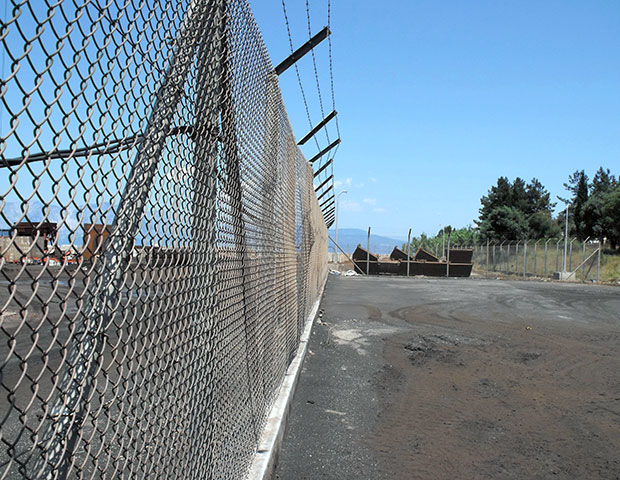
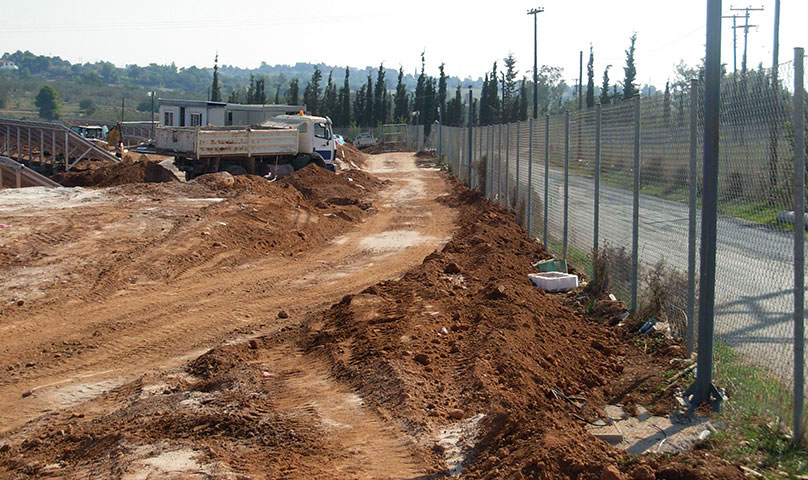
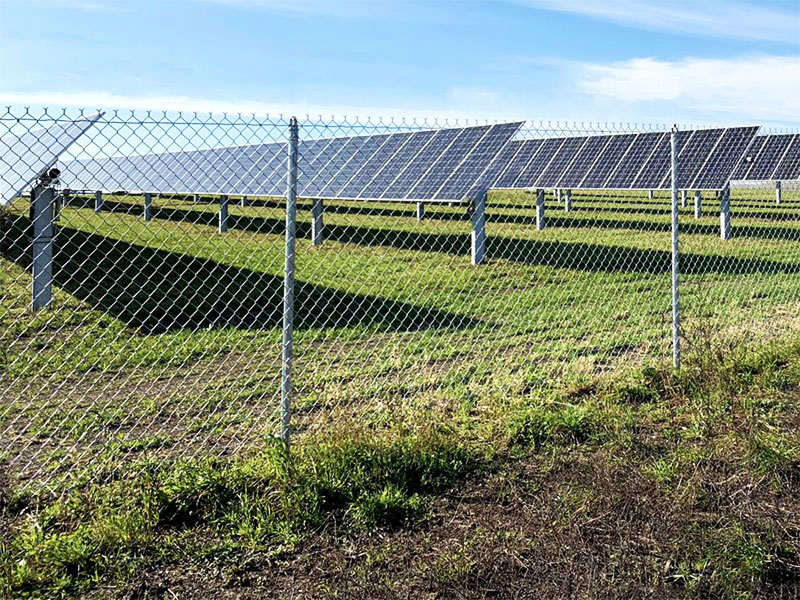
OPTIFENCE is an innovative perimeter alarm system designed for chain-link fences. It presents a number of unique performance characteristics that set it apart from traditional security technologies, making it ideal for a large variety of facilities, including solar power plants.
The sensing element is a polymer optical fiber (POF) attached to the fence. The resulting degree of protection is customizable and can be adjusted by installing the appropriate number of optical fibers in parallel at varying heights.
OPTIFENCE is a reliable, easy-to-deploy, and low-cost solution that offers significant benefits over competing technologies. Its sophisticated design positions it advantageously within its category and enables it to operate at a near-zero false alarm rate, saving valuable time and resources while earning client trust.
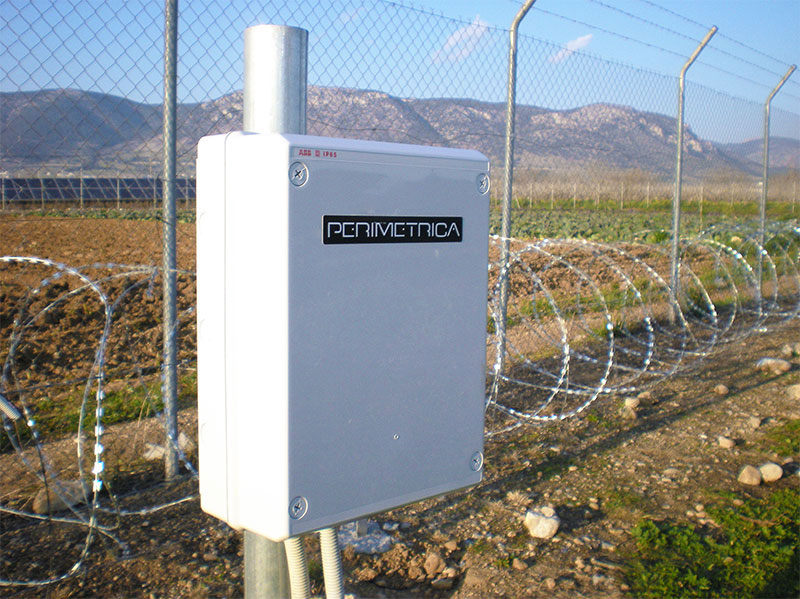

Operating principle
The system uses optoelectronic processors (analysers) to detect minute mechanical disturbances of the optical fiber. It is worth noting that this is not the same as vibration sensing. In the present case, an alarm is generated when the fence fabric is significantly displaced (pushed or pulled) from its resting position — for instance, when a person attempts to climb it, or if it is rammed by a vehicle or otherwise disturbed in a forcible manner.

Near-zero false alarms
OPTIFENCE is immune to vibrations by design, which is a key factor in its impressive performance. Consequently, it is unaffected by strong winds, heavy rain, hail, small animals and other outdoor disturbances, which is particularly important for facilities in remote or hard-to-reach locations.
In real-world installations, OPTIFENCE has operated for several months without a single false alarm.
Even in scenarios where the fence is in poor condition or the installation procedure was not followed correctly, OPTIFENCE presents a remarkably lower number of false alarms than traditional systems.

Degrees of protection
The system can be deployed in various configurations based on security requirements. During specification, the integrator determines if the project requires an economical system to guard against rushed intrusions, or a higher-cost system capable of detecting deliberate actions, such as cutting or lifting of the fence fabric.
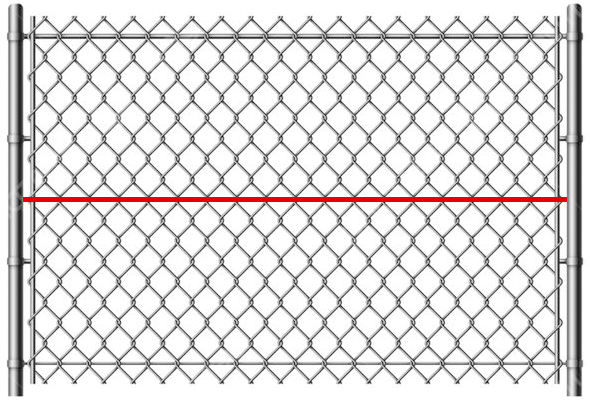
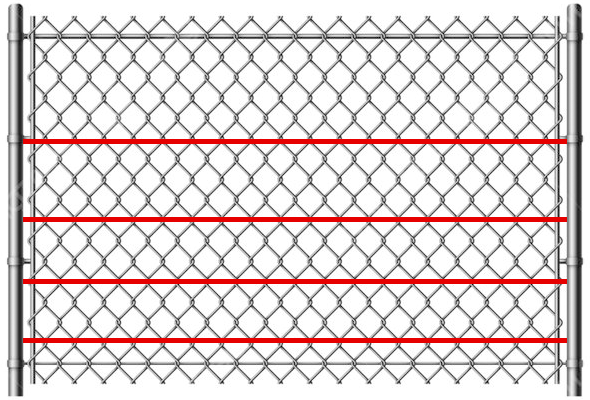
- In its simplest and most commonly deployed form, OPTIFENCE is installed with a single pass of optical fiber mounted halfway up the fence. This configuration can detect rushed intrusion attempts, such as fence climbing and vehicle ramming. More often than not, it satisfies the requirements of insurance companies for solar power plants.
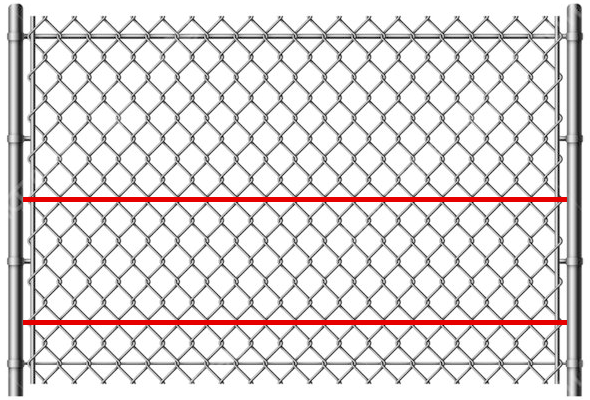
- A second pass at the lower part of the fence significantly improves detection capability by making it harder for an intruder to cut a hole in the fence and penetrate it without being detected.
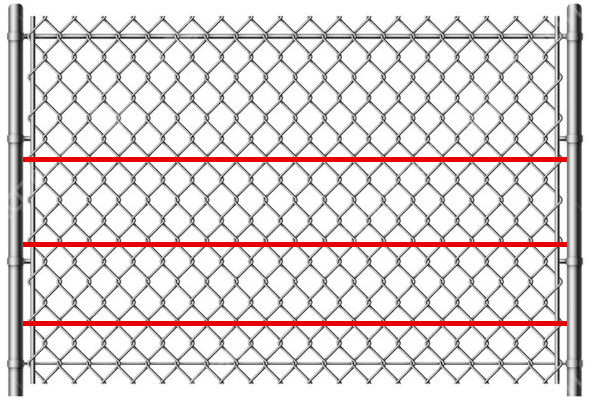
- A third pass further magnifies these capabilities.
- A fourth pass leaves so little room for the intruder to penetrate without causing sufficient disturbance to the fence that an undetected intrusion of any kind is highly unlikely.

Combined technologies
OPTIFENCE can be combined with other technologies, such as intelligent video motion detection. Because rural environments expose systems to uncontrollable conditions —like harsh weather, wildlife, insects and dust— the efficiency of video analysis is often reduced. Layering these technologies with OPTIFENCE mitigates these shortcomings, resulting in exceptionally high overall performance.

Project planning
Unlike other solutions, OPTIFENCE does not require a site visit until the actual commencement of installation. This allows the integrator to accomplish the following without visiting the site:
- Generate the Bill of Materials confidently, using the site plan
- Calculate the required man-hours precisely
- Predetermine the position of each processor and generate the wiring plan (which can be forwarded to the respective department and put into action immediately)
- Quote the entire perimeter security package
All of these unique advantages are possible because:
- OPTIFENCE is terrain-following: Regardless of whether the terrain is smooth or steep, no blind spots exist because the sensing optical fiber is attached directly onto the fence.
- Complex perimeter shapes do not necessitate the use of additional processors. The optical fiber turns each corner of the fence until the known operating range is reached (or in accordance with the desired zoning layout).
- Nearby walls, buildings, large objects, heavy machinery, exposure to the elements, etc. do not affect system operation and therefore are of no concern.

Installation & Comissioning
The system can be installed by technicians with no special knowledge or experience in fiber optics. All it takes is following a straightforward procedure.
No specialized equipment is needed to terminate or splice the fiber. Both tasks are accomplished using a low-cost hand tool that cuts and terminates the fiber with a snap action. Additionally, by design, OPTIFENCE does not use optical connectors — the fiber is inserted directly into a receptacle at the processor, eliminating the time-consuming process of attaching connectors.
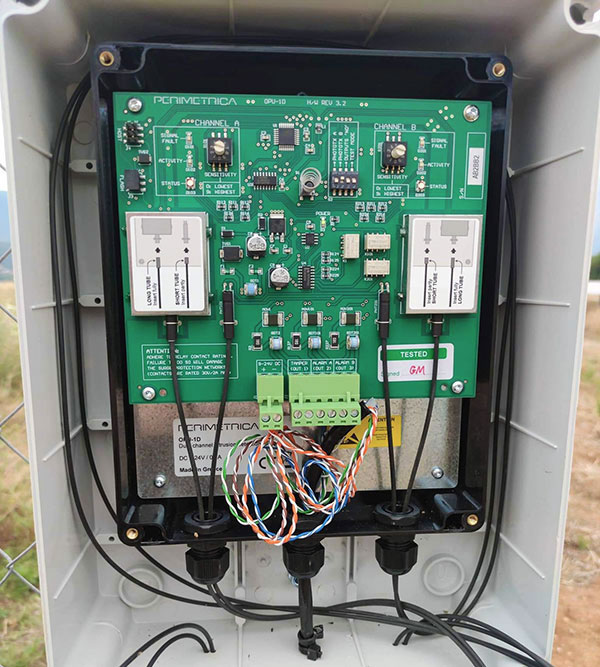
The OPU-1 processor performs fully automatic calibration before and during operation, requiring no user intervention. It has on-board optical power metering, so additional test equipment is not needed. A rotary microswitch allows instant selection from 9 preset sensitivity programs. Alternatively, the detection algorithm can be finely adjusted using a laptop but in most cases this is not necessary.
Simply select a preset, attempt climbing the fence and observe the indications on the processor to configure, test, and deliver the system.
Key strengths
- Zero or near-zero false alarms
- No site visit required to plan and quote the project
- Minimal requirements on infrastructure work
- Variable degree of protection among different projects while using the same components
- Easier and faster to deploy than other solutions
- No blind spots regardless of terrain
- Unaffected by weather and outdoor disturbances
- Does not occupy space within the protected area
- Fits all chain-link fences
Technical characteristics
Detection zone length: 300m (incl. 2 splicings)
Zones per processor: 1 or 2 (OPU-1S or OPU-1D)
Relay outputs: 1 tamper, 1 or 2 alarm (NO/NC select)
Power supply: 9-24VDC/100mA (reverse-protected)
Surge protection: Electronic 3-stage networks on every connection (power input & all relay contacts)
9 algorithm presets on-board or fine adjust via laptop
Daisy chaining — optical fiber can return to same processor or continue to next
Operating temperature: -40 to +80 ºC
Immune to EMI/RFI